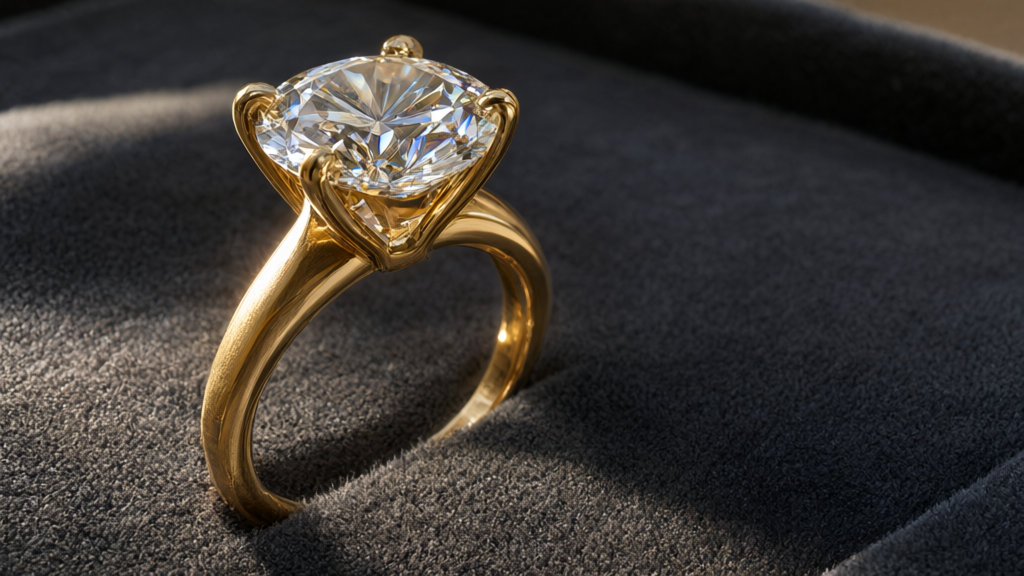
You wear your ring every day. You wash dishes with it, type on keyboards with it, and sleep in the sheets that press against it. The metal holds its shape because you trust it to, but trust is not a structural material. Daily life applies a steady, invisible pressure to the setting. Every time your hand bumps against a doorframe or catches on a sweater sleeve, the prongs flex. They do not break immediately. They fatigue slowly, like a wire bent back and forth until it snaps. This stress is cumulative. It happens in the quiet moments when you are not looking at the jewelry, only using your hands. Most people assume their engagement ring is static, an object of beauty sitting passively on a finger. It is actually a mechanical device under constant load. The diamond does not care about the traffic, but the gold does. The platinum does. The alloy holding the stone has a memory for stress. If you never check it, you will find out where the failure point is when the stone falls out. That moment is always sudden. It feels like bad luck, but it is just physics catching up with maintenance. A home inspection is not an optional chore for the anxious. It is a necessary habit for anyone who intends to keep a piece for decades. You cannot prevent all wear, but you can catch the warning signs before they become disasters. The difference between a simple tightening and a full recasting often comes down to whether you looked closely enough last week. Do not wait for the gap to appear. Look now.
Look at the Prongs
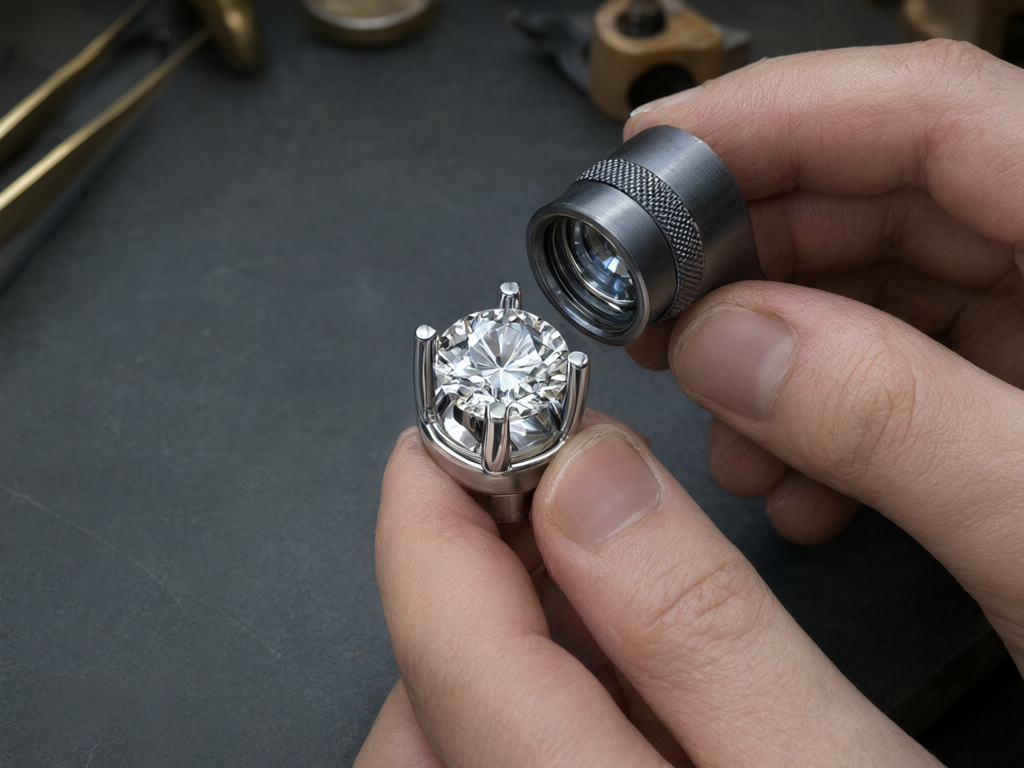
Start with light. Not the soft glow of a living room lamp, which hides shadows and flattens depth. Use direct sunlight if possible, or a bright white flashlight held at an angle. Position the ring so the light hits the side of the stone, not just the top. You are looking for movement. Gently touch the girdle, the thin edge where the diamond meets the metal. Does it wobble? A secure stone sits still. If it shifts even slightly under gentle pressure, the grip is compromised. Next, look at the prongs themselves. These are the claws holding the gem. Run your fingertip over them. Are they sharp? Prongs should be smooth and rounded at the tips. If they feel sharp or snag on clothing, they have worn thin. This is common on rings worn daily for ten years or more. The tip erodes from friction against fabric and skin. When a prong wears down, it loses its ability to hold the stone securely. Use a magnifying glass if you have one. A jeweler's loupe is ideal, but a strong reading glass works too. Look for gaps between the metal and the stone. Even a hairline separation is a red flag. Check all four or six points of contact. Sometimes one prong fails while the others hold, creating a false sense of security. If the stone looks loose in the setting, do not wear it. Take it off immediately. Put it in a safe place. Then plan to get it checked. You might also notice dirt buildup around the base of the stone. Clean this gently with a soft brush and mild soap. Dirt can mask small cracks or looseness. Once clean, inspect again. Light reveals what grime hides. Tactile feedback confirms what the eye suspects. Your fingers know the texture of healthy metal. They know when something feels wrong. Trust that sensation. If it feels precarious, it probably is.
Check the Metal
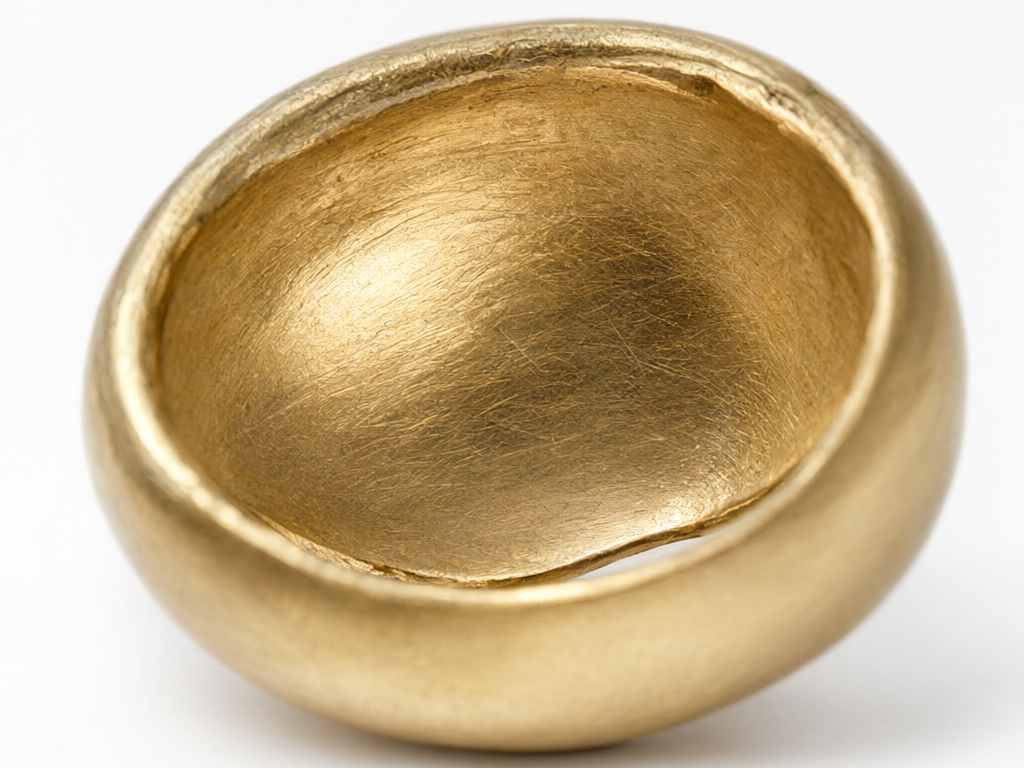
The metal itself tells a story that is harder to read than the stones. Hold the ring up to a mirror. Turn it slowly. Look for thin spots on the shank, the band that goes around your finger. This area bears the most weight and stress. Over time, it thins out, especially on the bottom where it rubs against tables and steering wheels. If the band looks uneven or visibly narrower in one spot, it is weak. A snap can happen there without warning. Also, check for hairline fractures. These are tiny cracks in the metal that may not be visible to the naked eye. Bend the ring very gently, if it is flexible enough, and watch for lines appearing. Or use a black marker to color the band, then wipe it off. Ink settles into cracks, making them visible. Be careful not to damage porous stones with ink, though. Test on a hidden area first. Avoid harsh chemicals. Many household cleaners contain bleach or ammonia, which can pit precious metals and dull finishes. Do not soak your ring in random liquids hoping for a quick fix. Professional ultrasonic cleaners exist for a reason. Home remedies often cause more harm than good. If you see discoloration or rough patches, note them. These can indicate corrosion or previous poor repairs. Pay attention to the solder joints, where different parts of the ring were joined. These seams are vulnerable points. If a joint looks cracked or separated, the structural integrity is gone. You should bring your ring in for a professional cleaning every month. This routine ensures that any subtle changes are caught early by someone who knows what to look for. Waiting longer risks missing the window for simple repair. Small issues grow. Worn shanks become broken bands. Loose prongs become lost diamonds. The cost of prevention is negligible compared to the cost of replacement. Inspect the inside of the band too. Check for sharp edges that might cut your finger. Smoothness indicates health. Roughness indicates wear or damage. Keep a log if you like. Date each checkup. Patterns emerge over time. You will learn how fast your specific ring wears. This knowledge empowers you to act before failure occurs.
When to Visit the Bench
There is a limit to what you can do at home. You can identify problems, but you cannot fix them. Jewelry repair requires specialized tools and training. If you found a loose prong, a thin shank, or a crack, stop wearing the piece. Bring it to a bench. At Bergman Jewelers, we handle fine jewelry care with the precision it demands. We have been in business for more than 40 years, repairing everything from delicate estate pieces to modern custom designs. Our technicians understand the metallurgy and the mechanics of settings. They can retip prongs, rebuild shanks, and reset stones securely. For watches, we repair fine Swiss movements, ensuring that timekeeping remains accurate after service. If you inherited a piece, it may need restoration rather than just repair. Estate jewelry often carries history in its wear patterns. We assess these items carefully, respecting their original design while making them wearable again. We also sell luxury watches, including pre-owned models that come with a one-year warranty. This guarantee reflects our confidence in our technical work. But remember, that warranty applies to watches, not jewelry. Jewelry repairs are judged by the quality of the restoration and the longevity of the fix. We stand behind our craftsmanship. When you visit us, bring your concerns. Show us what you saw during your home checks. Describe the symptoms. Did it snag? Did it feel loose? Did you see a crack? This information helps us diagnose quickly. We will examine the piece under proper magnification and lighting. Then we will explain your options. Sometimes a simple tightening suffices. Other times, a complete rebuild is needed. We will tell you honestly. There is no benefit to us in keeping a dangerous piece in circulation. Safety matters. Security matters. Understanding your jewelry is part of owning it. Do not let fear of the unknown keep you from caring for your treasures. Knowledge reduces anxiety. Action prevents loss. Make the appointment. Let us help you keep what you love. The bench is ready for your piece. We treat every item as if it were ours to keep. Because eventually, many of them are passed down. Ensure they survive the journey. Come in. Talk to us. Learn what your ring needs. We are here to serve you, not just to sell. Care is a commitment. We share it with you.
Bergman Jewelers is at 5340 Donald Ross Rd, Suite 110, Palm Beach Gardens. Call (561) 627-0900 if you would rather talk than browse.