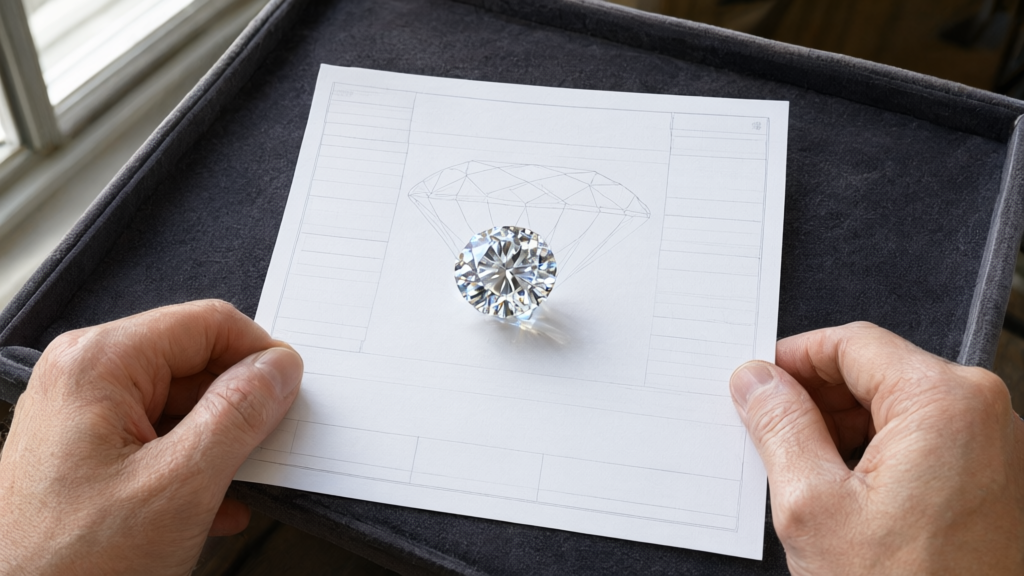
A GIA report is not a price tag. It is a data sheet. When you hold that small paper in your hand, you are looking at a technical specification for a piece of natural carbon arranged in a crystal lattice. The document tells you what the stone is. It does not tell you what it is worth to you, nor does it predict what someone else will pay for it next month. Value is a conversation between buyer and seller, influenced by market conditions, rarity, and personal preference. The report, however, remains static. It records facts observed under controlled laboratory conditions. If you treat the report as an appraisal, you will be disappointed. Appraisals assign monetary value based on current replacement costs or fair market values, often for insurance purposes. A grading report assigns physical characteristics. They are different tools for different jobs. At Bergman Jewelers, we have spent more than forty years helping people understand this distinction. We see customers who believe the number printed on the line item is a guarantee of resale value. It is not. It is a guarantee of quality within a specific set of parameters. The clarity grade is a statement about internal features. The color grade is a statement about hue. The carat weight is a measure of mass. None of these fields contain a dollar sign. To read the report correctly, you must strip away the emotional weight of ownership and look at the stone as an engineer would: measuring inputs and outputs. This neutral perspective protects you from overpaying for features that do not matter to your eye, and from undervaluing stones that possess qualities not captured by simple grades. The paper is a map. Your experience of the diamond is the territory.
The Hierarchy of Light and Flaws
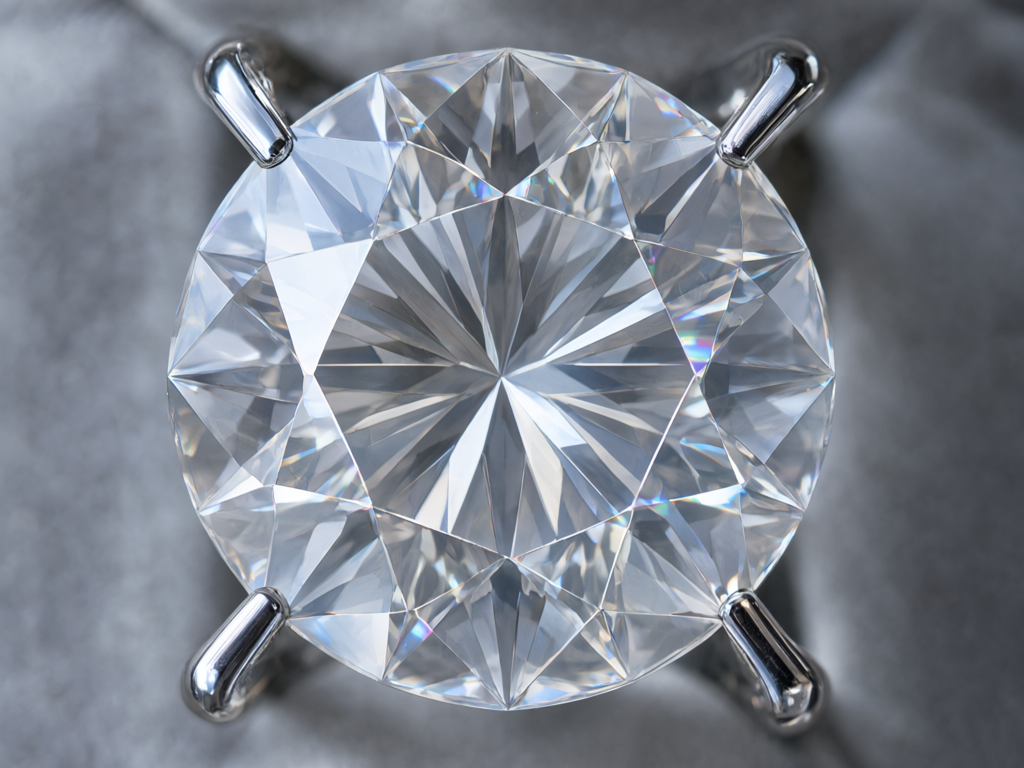
Start with Cut. In the GIA system, cut grade is arguably the most consequential factor for visual appeal, yet it is often misunderstood as merely shape. Shape is round, oval, princess. Cut is how well the facets interact with light. A poorly cut diamond leaks light out the bottom or sides. A well-cut diamond acts like a mirror system, returning light through the top table. This return creates brilliance, fire, and scintillation. When you look at the report, check the proportions. Depth percentage and table size dictate how much light enters and exits. A shallow stone may look larger for its weight but will appear glassy and dull. A deep stone may trap light, creating a dark center known as a fish-eye effect. Now consider Clarity. The scale runs from Flawless to Included. Most diamonds fall into the VVS, VS, and SI ranges. Here is the uncomfortable truth: once a diamond reaches a certain threshold, typically VS2 or higher, the flaws are invisible to the naked eye without magnification. You are paying for cleanliness under a loupe, not beauty in daylight. A VS1 stone looks identical to a Flawless stone when set in a ring, unless you have a microscope and good lighting. Yet the price difference can be significant. The hierarchy matters because light performance is immediate. Flaws are theoretical until they break the surface or reflect back as black spots. For engagement rings, prioritize Cut above all else. A superlative cut can make a lower clarity stone sparkle so intensely that the eye cannot detect the minor inclusions. Conversely, a mediocre cut will make a high-clarity stone look lifeless. The report gives you the raw numbers. Your job is to weigh them against what you actually see.
Beyond the Basic Grades
Once you have mastered the Four Cs, look at the additional data points. These fields are often overlooked by buyers who stop reading after the summary page. Fluorescence is one such field. It describes how a diamond reacts to ultraviolet light. Many diamonds glow blue under UV rays. This is natural. Does it hurt the stone? Not necessarily. In some cases, strong fluorescence can make a slightly yellowish diamond appear whiter in sunlight, where UV is present. However, in rare instances, heavy fluorescence can cause a milky or oily appearance, reducing transparency. The report notes the intensity: Faint, Medium, Strong, Very Strong. It does not note whether the stone looks hazy. That requires visual inspection. Check the polish and symmetry grades. Polish refers to the smoothness of the facet surfaces. Poor polish can leave tiny scratches that scatter light, reducing brilliance. Symmetry refers to the alignment of facets. Asymmetrical facets disrupt the pattern of light return. While Excellent ratings are ideal, Good is acceptable if the overall cut grade compensates. Look at the culet. This is the point at the bottom of the pavilion. A very small culet is standard. A large culet can be visible as a dot through the table. Inspect the girdle thickness. A thin girdle is prone to chipping. A thick girdle adds unnecessary weight to the stone, meaning you pay for mass that does not contribute to face-up size. The report lists measurements in millimeters. Use them to calculate the spread. A 1-carat diamond should ideally measure around 6.4mm to 6.5mm across. If it measures 6.2mm, it holds weight in depth rather than width, making it look smaller than its peers. These details transform the report from a certificate into a diagnostic tool. They explain why two stones with the same grade might look different on the finger. Understanding these nuances allows you to ask better questions when viewing inventory. It helps you identify which trade-offs are aesthetic and which are structural.
Making the Trade-Off
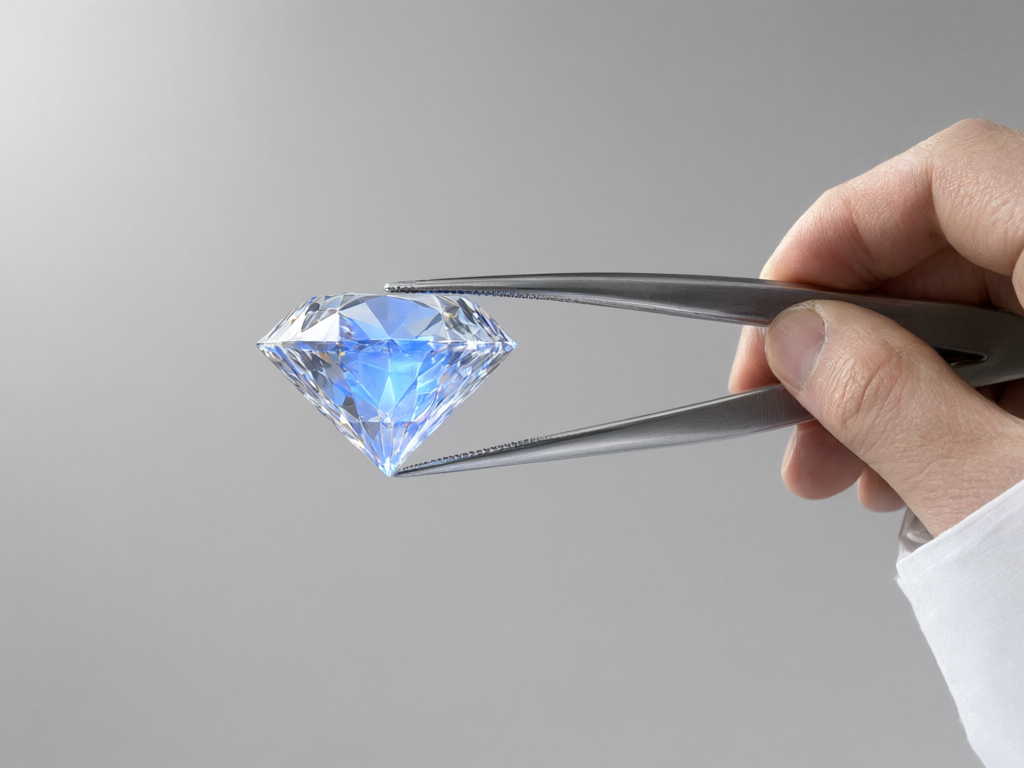
Buying a diamond is an exercise in compromise. You rarely get everything at once. The goal is to maximize perceived beauty while managing cost. This means making intentional trade-offs based on the data. If you want a larger stone, you might drop down one color grade. A G-color diamond looks white to most people in a platinum setting. An H-color might show slight warmth against yellow gold, but many find it charming. Dropping from D to H can save money without sacrificing elegance. Similarly, you might choose VS2 clarity over VVS1. Unless you plan to examine the stone with a jeweler's loupe regularly, the visual difference is nil. The money saved here should go toward Cut. Do not skimp on Cut. It is the engine of the diamond's beauty. A well-cut I-color, VS2 stone will dance in the light far better than a poorly cut D-color, FL stone. Consider the setting. White metal settings can mask body color in lower-grade stones. Yellow or rose gold can hide slight yellowness. If you are buying estate jewelry, the report may be old. Grading standards evolve. A stone graded twenty years ago might receive a different grade today due to updated criteria or better technology. Always view the stone in person. The report is a guide, not the destination. At Bergman, we specialize in larger GIA certified diamonds, which amplifies these decisions. With a bigger stone, flaws are easier to spot, and cut imperfections are more obvious. Precision matters more. If you are inheriting a piece, the report might not exist. That is common. Estate jewelry often lacks modern documentation. In those cases, we rely on observation and measurement. We help clients understand what they have before deciding on repairs or redesigns. Custom designs offer another avenue. You can select a stone that fits your budget and have it set to highlight its strengths. Perhaps a fancy shape hides a corner inclusion. Perhaps a halo masks a lower color grade. The key is to use the report as a starting point for dialogue, not a final verdict. Ask us to show you the stone. Look at it. Turn it. See how it catches the light. Trust your eyes first, then verify with the paper. This approach ensures you buy a diamond that brings joy, not just one that scores high on a spreadsheet.
Bergman Jewelers is at 5340 Donald Ross Rd, Suite 110, Palm Beach Gardens. Call (561) 627-0900 if you would rather talk than browse.